Read · Notes from the field
Relearning to train by feel
I first got into marathon running and triathlon before GPS watches, power meters or reliable body monitors were easy to come by or affordable. I learned to run and ride by feel, before I'd even really heard much about "RPE". It was intuitive: trying to stay in tune with the signals from my mind and my body.
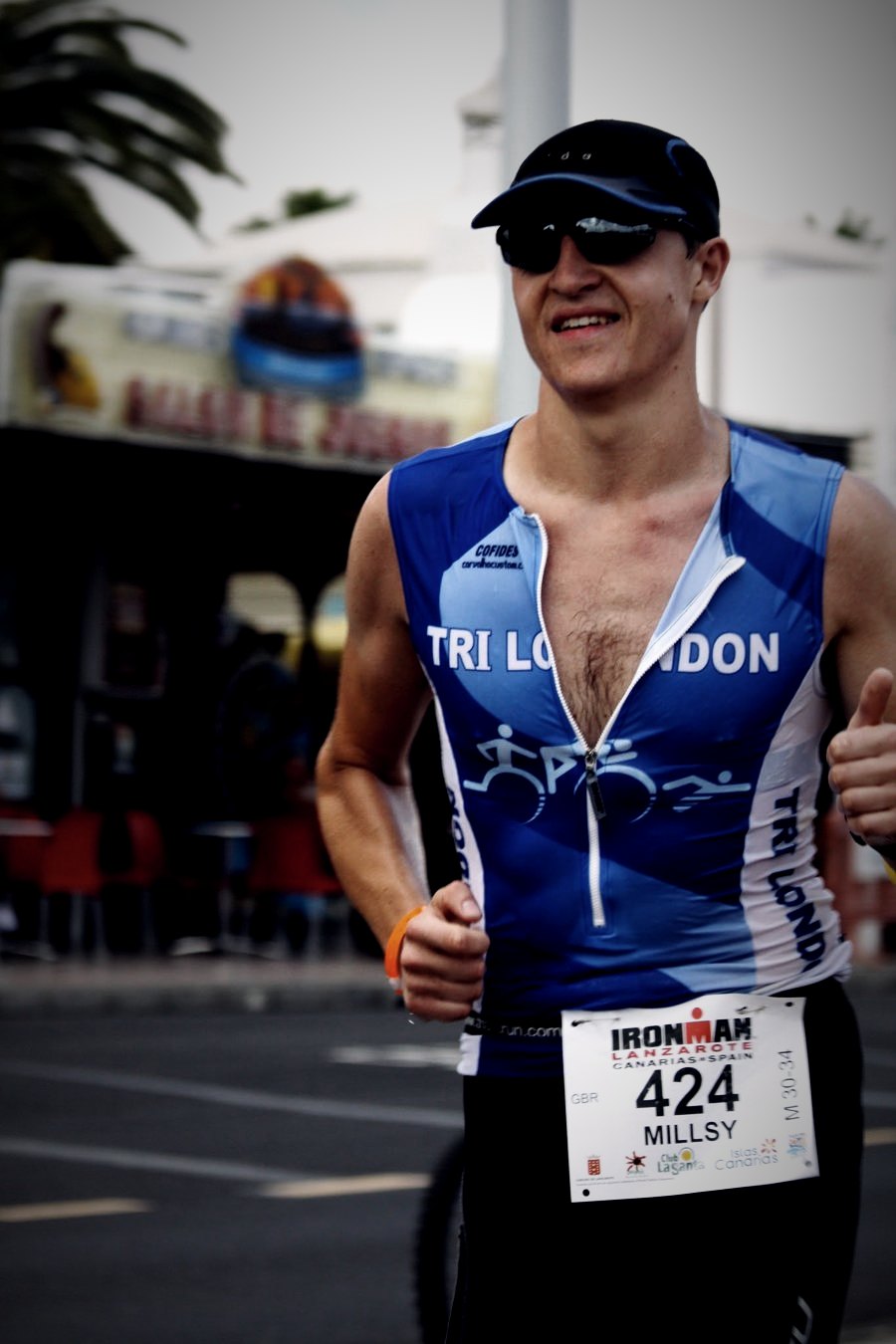
It took me five marathons and a number of half marathons before I really felt I had a good sense of pacing and execution for the race distances. But this analogue approach has stayed with me. My very first marathon, Stockholm in 2007, was a moment of realisation about just what the distance was all about. I felt great through the first of its two laps, then hit the wall hard at 29 km on an unusually hot, 30-degree June day. I'd under-fuelled because I didn't know any better, and the last 13 km were a brutal test of mental strength just to reach the finish. In that moment I realised what made this such a difficult yet special sport.
Steve Trew and tidal reps
My first triathlon coach, Steve Trew, made RPE the primary way I trained, with pace and heart rate as gauges, not goals in themselves. Once I had a solid sense of how different intensities felt, he built sessions around it, like tidal reps and hill reps straight into a time trial (there are samples below).
The point was to make race pace feel normal, and to teach my body and mind to handle it, and embrace it, under fatigue. The best pacing I've ever had was at Challenge Barcelona in 2010. I entered on a whim, having already raced Ironman Lanzarote and the European Long Course Championships that year, so there was no pressure and no goal in mind. I didn't even wear a watch! It turned out to be the most evenly paced Ironman-distance marathon I've run, and probably the race where I felt most in flow.
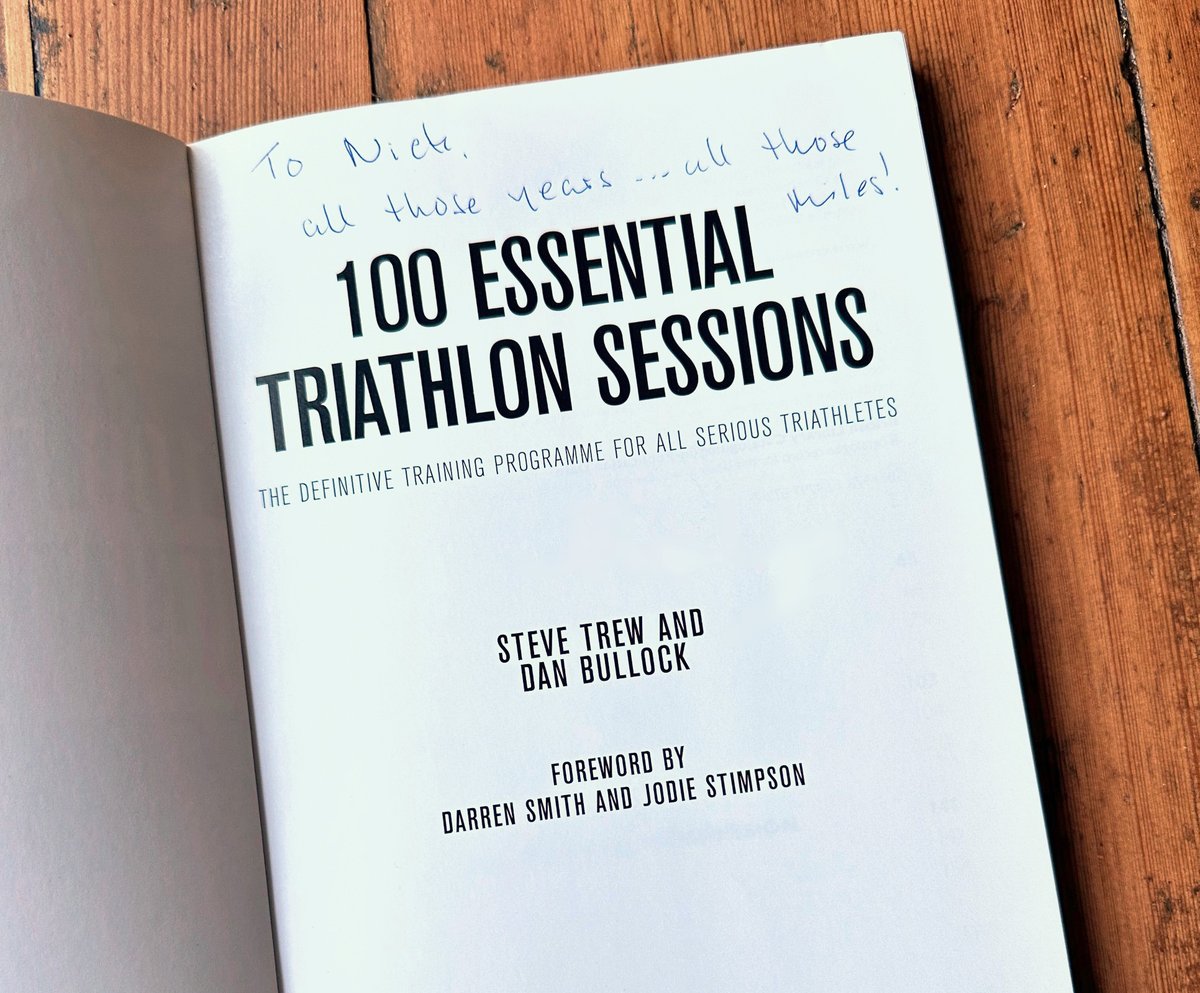
Steve and Dan Bullock wrote many of these sessions down in 100 Essential Triathlon Sessions. On paper they come with target paces, and one line in the book sums up the whole approach: "Pace judgement is the absolute key." But I didn't yet have the foundation to know what paces were possible for me, so Steve treated the paces as illustrative and described each effort by how it should feel: 3 km, 5 km or 10 km effort, and how long I might hold it. The goal wasn't "hit this split" but to hold a rate of perceived exertion over a time, format and cumulative distance. Once I got better at pacing, and more durable, we started using pace and splits to measure improvement.
Sample sessions: how I learned to train by feel
| Session | What it is | How it should feel |
|---|---|---|
| Run: tidal reps | From Steve's book (Run Session 8): warm up, then 30 x 400 m continuous, alternating target 5 km pace and target marathon pace (for a 19-minute 5 km runner aiming at a 3-hour marathon, about 1:31 and 1:42 per 400 m). Not ready for 30 in one go? Run fewer reps, or two sets of 15 with a minute or two of easy jogging between | 5 km-pace reps hard (about RPE 8 to 9); marathon-pace reps controlled (about RPE 6), even though you're still breathing hard. The skill is settling straight back to marathon pace with no rest |
| Run: long-course tidal (my version) | My adaptation for Ironman and long-course triathlon. Warm up with primers, then 5 minutes at half-marathon pace straight into 3 minutes at target Ironman run pace. Repeat 4 to 8 times, as fitness and the stage of the season allow. Most valuable for me in Build and Peak phases | The faster blocks hard but controlled (about RPE 7 to 8); Ironman pace should feel easy by comparison (about RPE 6), which is the point: learning to settle into race pace when you're already tired |
| Run: alternating miles | A continuous 6 to 8 miles, rotating hard, easy and medium miles | Hard about RPE 8, easy about 4, medium in between. No stopping, so you learn to judge each change of pace by feel |
| Bike: hill reps into a time trial | 60 minutes of hill reps, then straight into 60 minutes at race pace | The time trial should feel like race effort (about RPE 7) on legs that are already tired. |
The tech years
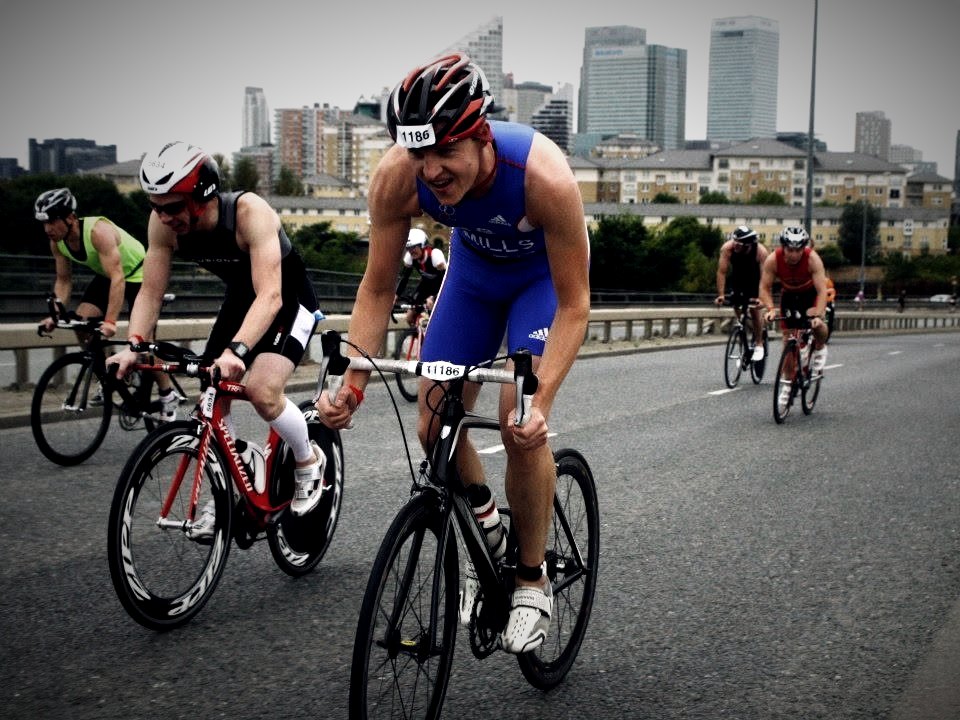
Professionally, I've worked in tech for over 25 years, and I've always been fascinated by how technology can give people insight and make them more productive. In my sports it's been a helpful guide for triangulating between what my mind and body tell me and the outputs I can measure: pace, power and watts per kilo. I was an early adopter of the Computrainer, before modern smart trainers took off, and I bought power cranks and a run power meter as soon as I could.
Even with all that kit, I've always found FTP derived from typical test protocols (ramp tests, 2 x 8 min, 2 x 10 min or 20-minute formats) hard to trust. They're useful as repeatable test sets, and I do use them to find my own baselines, but they only give a slice of my physical picture. Last spring I did my first ever online bike race and held a 45-minute power much better than anything my 3, 5, 10 and 20-minute bests were predicting at the time. With the right motivation, out on the road or in a time trial, I can usually hold numbers that don't look possible on FTP alone.
At the other end of the scale, I think FTP tests can be "gamed", to an extent. You can lift your curve by chasing maximum outputs in isolation, but that isn't the same as producing a repeatable level over the same durations. It's like targeting a PB on a road climb: if I warmed up perfectly and hit the climb fresh, maybe I'd get one. That doesn't mean my form is improving for the event I'm actually training for, unless all I'm doing is a one-off hill climb time trial.
As training apps multiplied and everything became measurable, I found myself getting too absorbed in what the data seemed to say.
I started choosing workouts to lift particular points on my power curve, like my 2, 3 and 5-minute power on the bike, without asking whether that was building sustained power and durability. On the run, I'd look at my predicted race paces, worked out from short efforts like track sessions or reps within steady runs, without testing whether they held up in real races.
I also put too much weight on my peak fitness score (CTL) each year, benchmarked against the athletes I wanted to race.
In my working life, building teams, companies and products, I lean on Goodhart's Law all the time: when a measure becomes a target, it stops being a good measure. I found I needed to check myself when it came to my training, and reassess what was a measure and what was a goal.
I've written more about why one number can't tell you what you trained in Training load by system, and the limits of a single score.
Going back to feel
Despite enjoying the technology, I've increasingly gone back to RPE and feel in all my workouts. Coach Joel Filliol puts it well: "coaches can see but can't feel, athletes can feel but can't see." That's how I've come to use my tech. The watch stays passive while I'm running, and I go on feel and RPE. Afterwards, that supercomputer on my wrist helps me make sense of what my body was telling me.
A few concrete examples:
- Varied terrain. I use it to be more responsive and flexible on the "hard" metrics like pace and power, and focus on flow and feel instead.
- Tidal training. I still use it, typically in an Ironman build.
- Tempo late in aerobic rides. My bike in Almere this year was stronger in the first half than the second. So this winter I'm adding light tempo in the latter stages of my easy aerobic rides, to train durability under fatigue, and the mental side of embracing how that feels. It'll get more race-specific in the spring.
- Field tests on the road. I've always tested more on the road than on the turbo or in a lab. Before I'd heard of durability, I was looking at my power within real rides, and late in them, rather than at best efforts from a one-off test or from sessions spent chasing my best 1, 3 or 5-minute power. That might be a steady 10-minute climb in the middle of a long ride, or 30 minutes on a rolling stretch of road towards the end, before the cool-down. Pacing those efforts by feel, then checking the numbers afterwards, has been valuable.
Why it matters more now
I'm a father, a husband, and an athlete with a day job. My training plan only shows the sessions. It doesn't show the disturbed nights, the lack of sleep, the work deadlines or travel, the changing periods of the year or the environmental conditions. Feel is how I notice those. An easy run that feels harder than it should is often the first sign that something else is taking a share of my recovery. I've written more about that in Training isn't your only load.
I'll always be fascinated by the pace of the science, and by how technology can help me understand and guide my training. But when it comes down to it, my motivation, enjoyment and fulfilment all come from the feeling I get when I'm out there. That's what I truly love.
On my shelf
- Endure by Alex Hutchinson. It changed how I think about the limits I hit late in a race: often it isn't that the body has nothing left, it's that the brain is deciding how much to give.
- 100 Essential Triathlon Sessions by Steve Trew and Dan Bullock. Steve and Dan in a nutshell: a timeless collection of key sessions, tidal reps included, that gave me the foundation to train for multisport.
- The Human Mind: A Brief Tour of Everything We Know by Paul Bloom. A masterclass in modern, replication-tested psychology that will resonate with endurance athletes, because it demystifies how drive, motivation and our perception of pain are hardwired by evolution.